BTC Dominance Explained: The One Chart That Tells You When Alts Will Cook
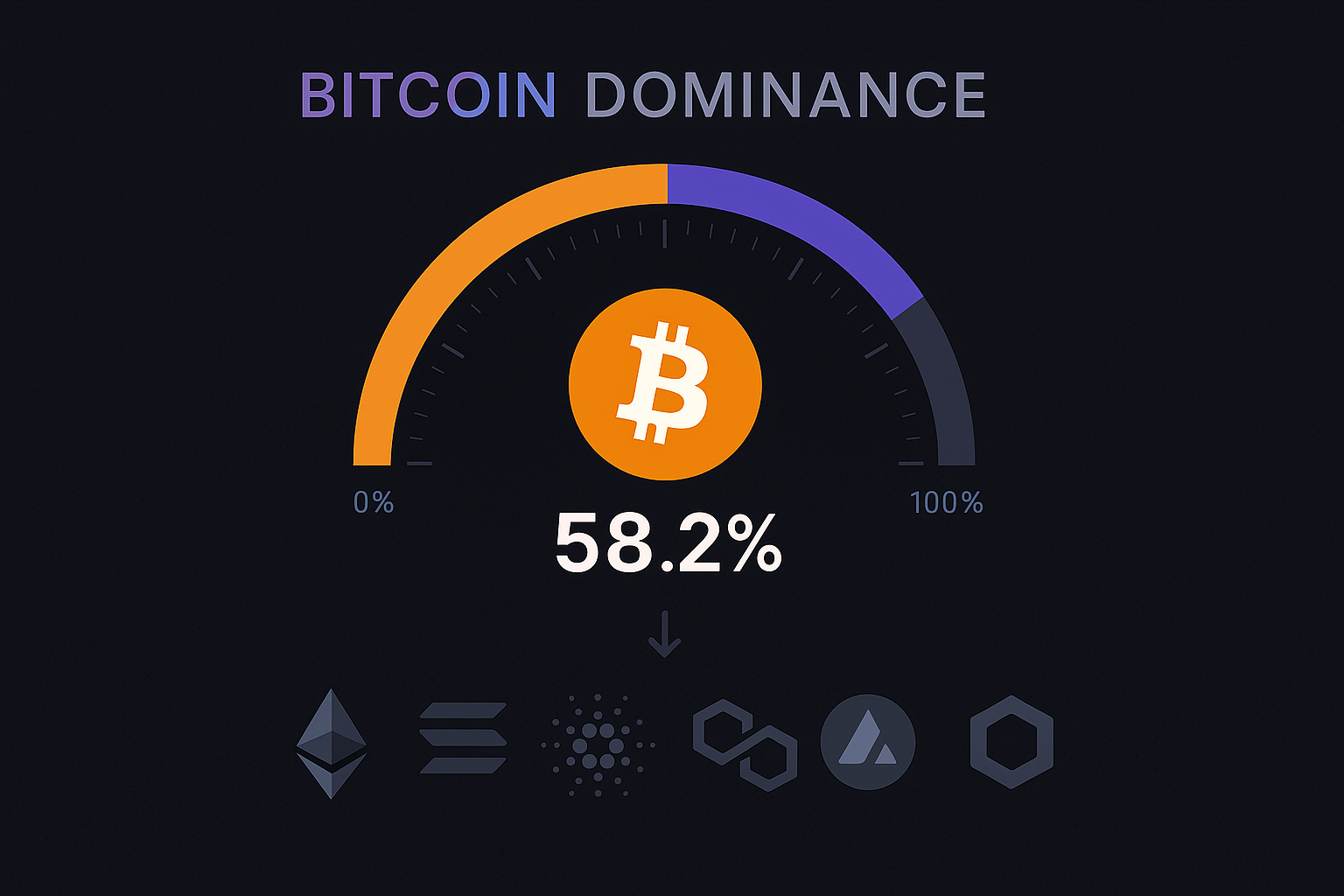
If you've spent more than 10 minutes in crypto, you've probably heard someone say "BTC dominance is rising" like it's some kind of prophecy. And honestly? It kind of is.
Bitcoin dominance (BTC.D) is one of those deceptively simple metrics that tells you way more than it should. It's basically the market's mood ring — except instead of turning blue when you're sad, it tells you when alts are about to get absolutely wrecked (or when they're about to go parabolic).
Let's break it down.
What Is BTC Dominance?
Bitcoin dominance is the percentage of the total crypto market cap that Bitcoin represents.
```
BTC Dominance = (Bitcoin Market Cap / Total Crypto Market Cap) × 100
```
So if Bitcoin's market cap is $1 trillion and the entire crypto market cap is $2 trillion, BTC dominance is 50%.
Simple, right? But here's where it gets spicy.
Why BTC Dominance Matters
BTC dominance is basically a risk appetite gauge for the crypto market.
When BTC Dominance Is Rising
- Money is flowing into Bitcoin and out of alts
When BTC Dominance Is Falling
- Money is flowing out of Bitcoin and into alts
The BTC Dominance Cycle (The Pattern You Need to Know)
Here's the typical flow during a bull market:
1. Bitcoin pumps first → BTC.D rises
- New money enters crypto through BTC (it's the gateway drug)
- Alts bleed in BTC pairs but might stay flat in USD
- Everyone's like "this time alts are dead"
2. Bitcoin cools off, dominance peaks → BTC.D tops out
- BTC holders get bored of 5% pumps
- They start rotating into ETH and top alts
- Dominance starts falling
3. Altseason kicks in → BTC.D crashes
- Money floods into alts
- Everything pumps, even the stuff with no use case
- You see tweets like "my portfolio is up 400% this month"
- This is the danger zone (it feels amazing but ends badly)
4. The top hits, everything dumps → BTC.D spikes again
- Panic selling across the board
- People flee back to Bitcoin or stables
- Alts get annihilated
- Dominance shoots up as alts lose value faster than BTC
Then the cycle repeats (or we enter a bear market and everyone cries for 18 months).
How to Actually Use BTC Dominance
Here's the thing: BTC dominance is a lagging indicator and a leading indicator depending on how you use it.
✅ Good Uses
If BTC dominance is rising and approaching resistance (like 60%+), it might be signaling an upcoming rotation into alts. Not a guarantee, but a heads-up.
If dominance is falling hard (sub-40%) and alts are going parabolic, it's probably time to start scaling out. That's the euphoria phase, and it doesn't last.
Rising dominance = fear. Falling dominance = greed. Use it with other indicators like the Fear & Greed Index to get a fuller picture.
❌ Bad Uses
Don't just buy alts because "BTC.D is high." You need confirmation: is BTC consolidating? Is volume picking up in alts? Are narratives shifting?
Dominance can stay high (or low) for months. It's not a countdown clock. It's a gauge, not a trigger.
If the entire market is dumping, falling BTC dominance just means alts are dying faster. Context matters.
Common BTC Dominance Myths
Myth 1: "High dominance means alts are cheap"
Not necessarily. High dominance might just mean alts are trash and no one wants them. You need to look at why dominance is high. Is BTC pumping? Or are alts bleeding out in a bear market?
Myth 2: "Low dominance = altseason guaranteed"
Nope. Dominance can fall because alts are pumping or because BTC is crashing faster. Always check if the total market cap is rising or falling.
Myth 3: "BTC dominance over 50% is bearish"
Not always. In 2017, dominance fell from 85% to 35% during the bull run. In 2021, it hovered around 40-50% for months while the market ripped. The trend matters more than the absolute number.
Where to Track BTC Dominance
You don't need fancy tools. Just check:
- TradingView — Search "BTC.D" and you'll get a clean chart
Pro tip: Set alerts when BTC.D hits key levels (like 50%, 55%, 60%). It won't tell you what to do, but it'll remind you to pay attention.
The Real Takeaway
BTC dominance isn't some magic crystal ball. But it is one of the best high-level reads on where money is flowing in crypto.
- Rising dominance? Be cautious with alts. Focus on BTC or stables. Wait for the rotation.
And remember: dominance is a sentiment gauge, not a strategy. Pair it with solid research, risk management, and a plan for taking profits.
Because the worst thing you can do is know when altseason is coming… and still hold through the entire dump.
---
- BTC dominance = Bitcoin's % of total crypto market cap
Don't chase. Don't panic. Just watch the chart and act accordingly.
Liked this? Get more daily ☕
Newsletter in your inbox + breaking alerts on Telegram